Khushin

World
Twenty plates

Nature, drawn as machine.

An ongoing set made alongside the products — roots as wiring, deltas as ledgers, orchards as instruments. Every plate says how it was made.
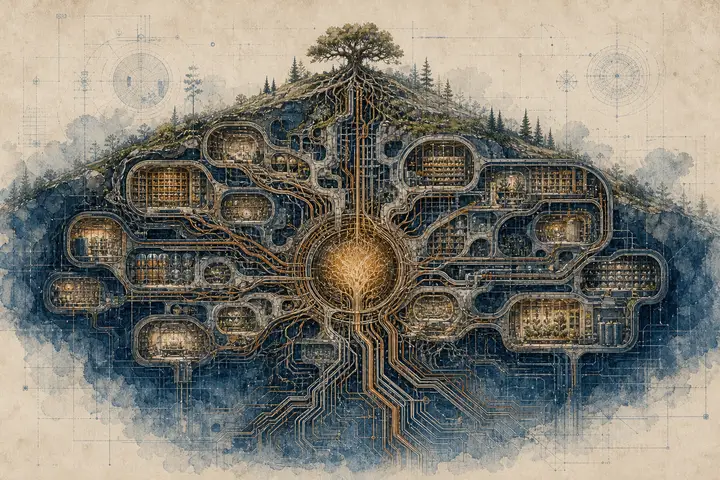
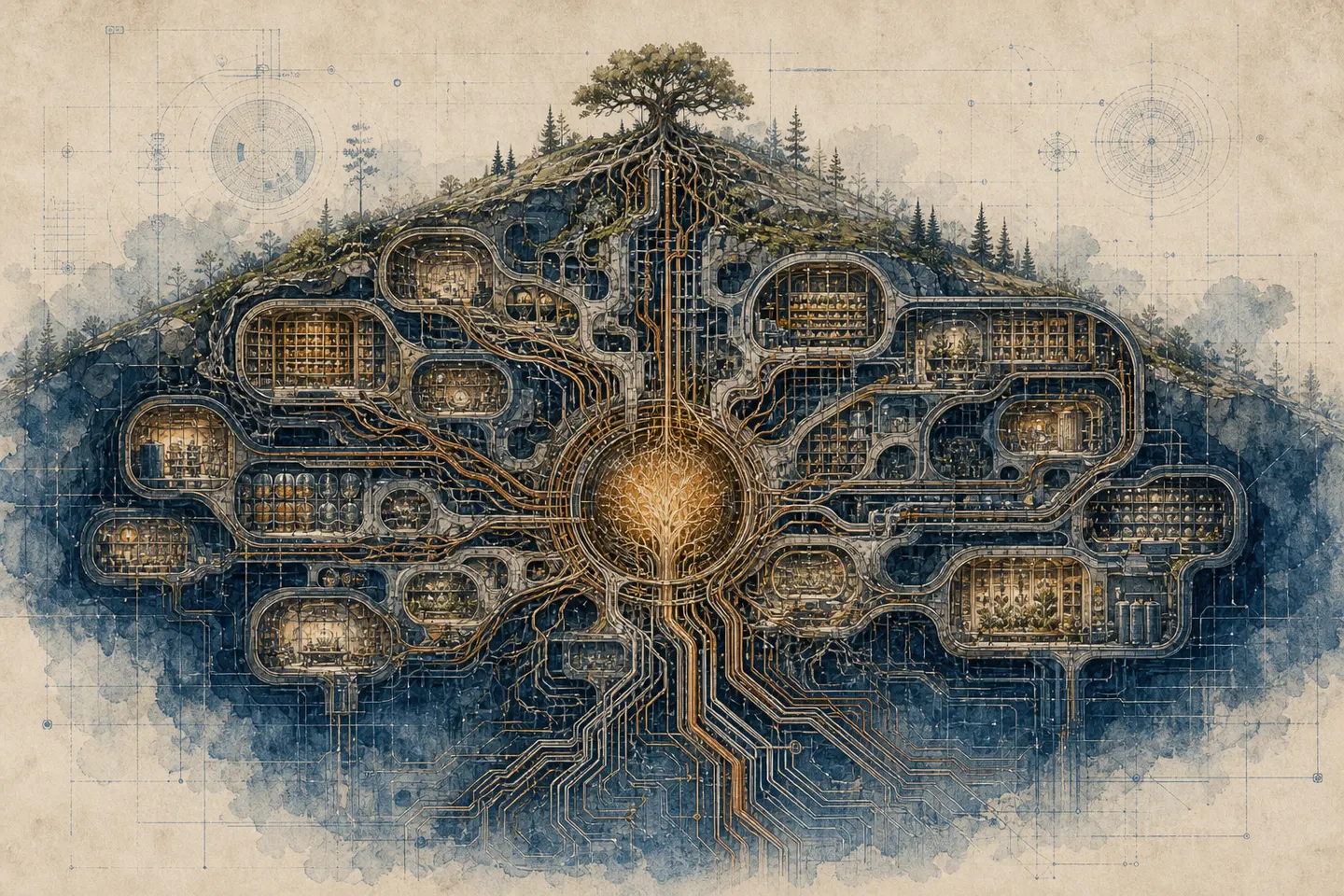
  1. An underground cutaway in deep indigo: a great tree above ground, its root system below opened into vaulted chambers and glowing seed stores wired together like circuitry.

    Vault roots01

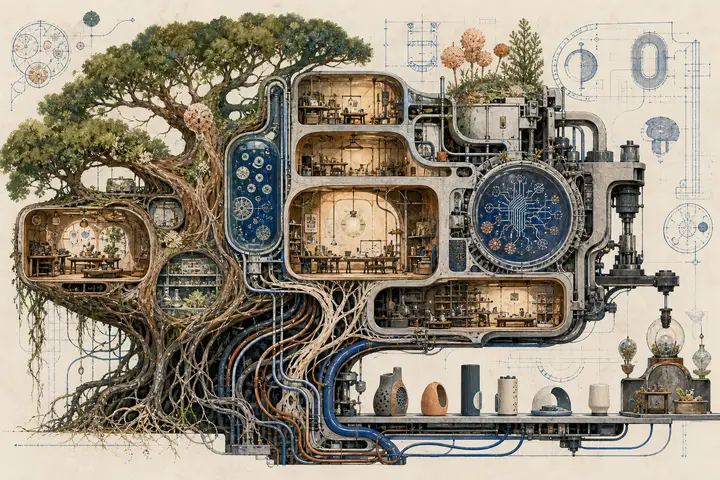
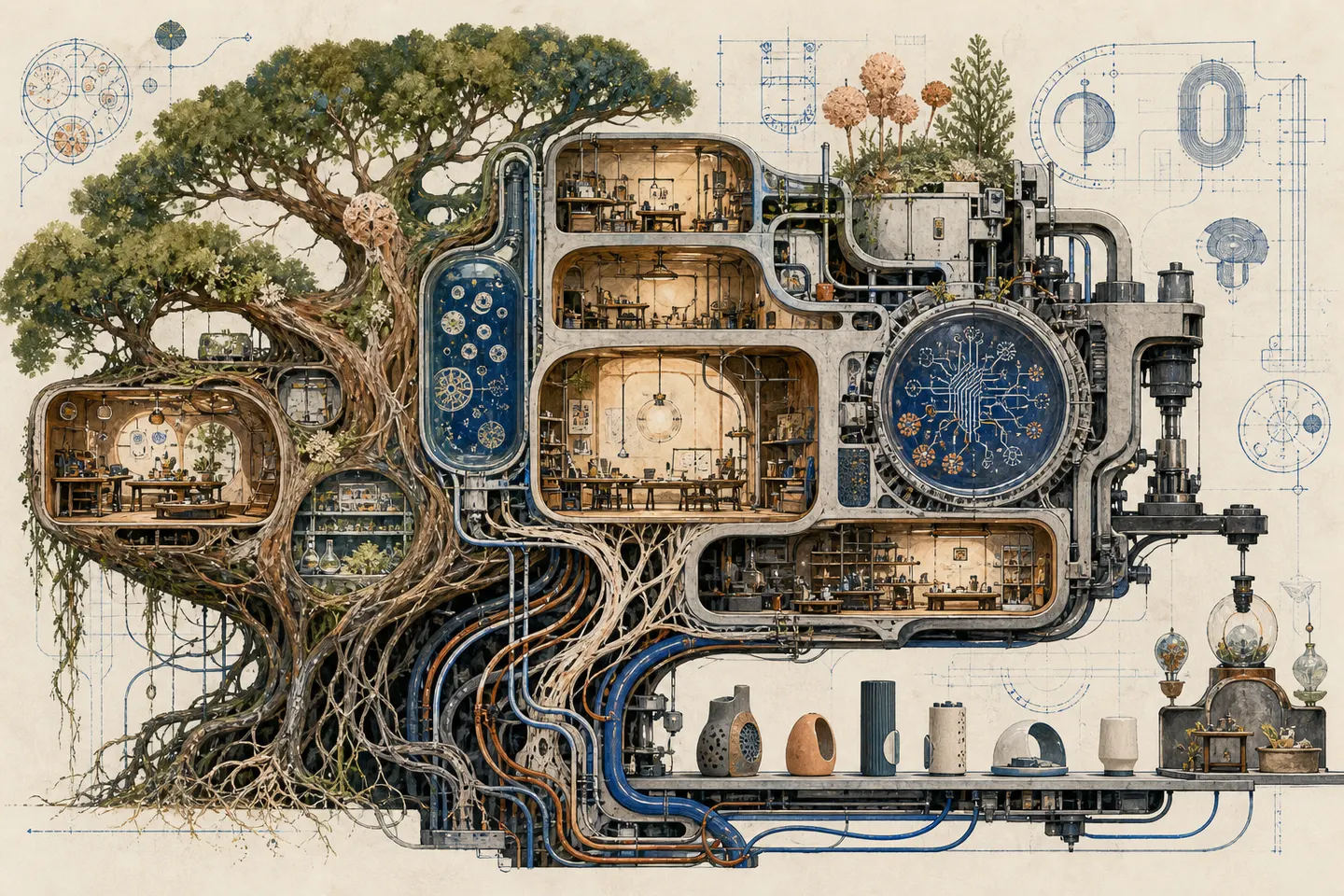
  2. A cross-section of a workshop grown into a tree — pipes, tanks and lit rooms threaded between the roots and branches, drawn as an engineering plate on aged paper.

    Studio cutaway02

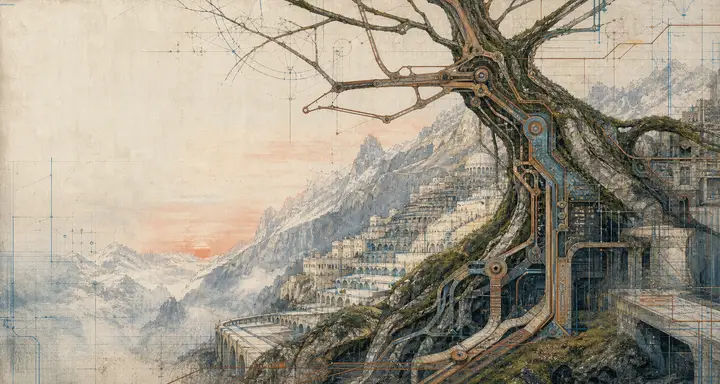
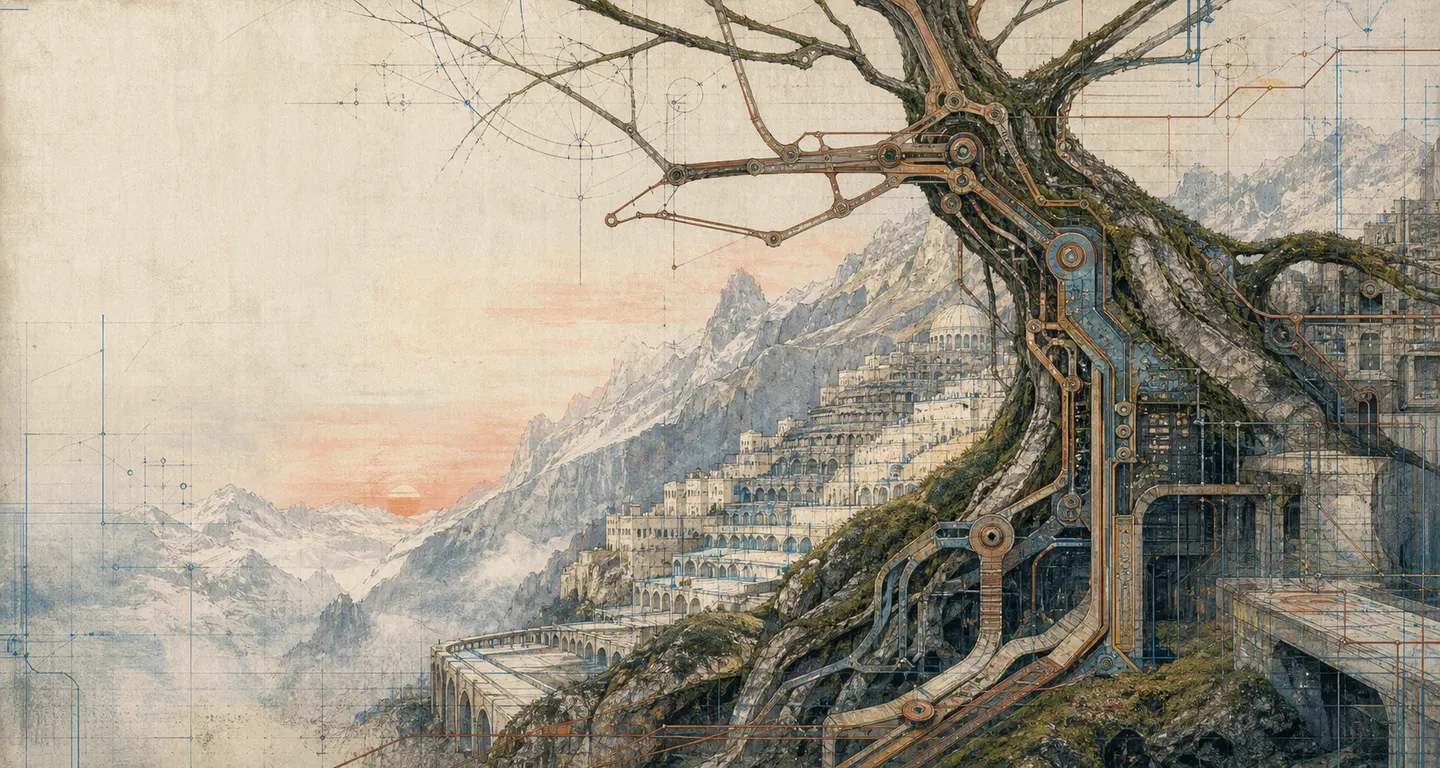
  3. A vast bare tree standing over a misty mountain valley at dawn, its branches and the terraces below drawn with the same fine ruled linework, so the landscape and the tree read as one machine.

    Tree city03

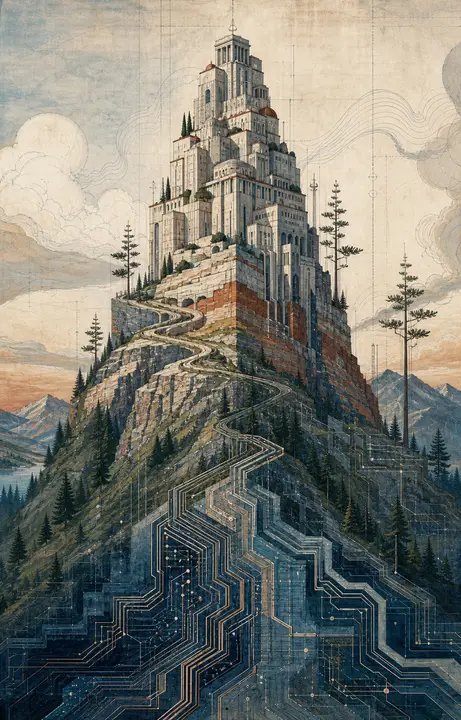
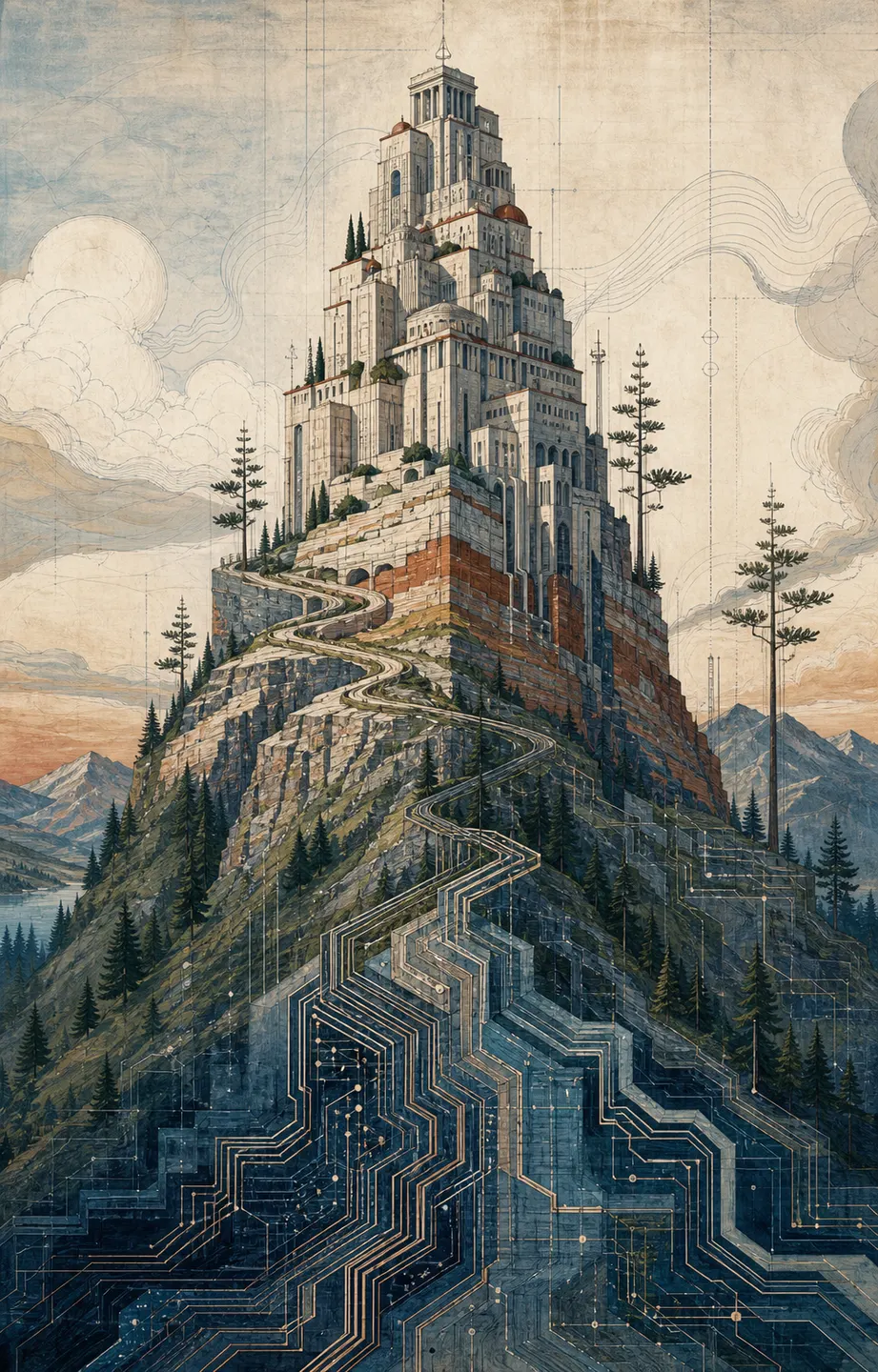
  4. A stepped city built into a steep pine-covered mountain, the lower slopes resolving into a blue geometric lattice like a printed circuit.

    Mountain city04

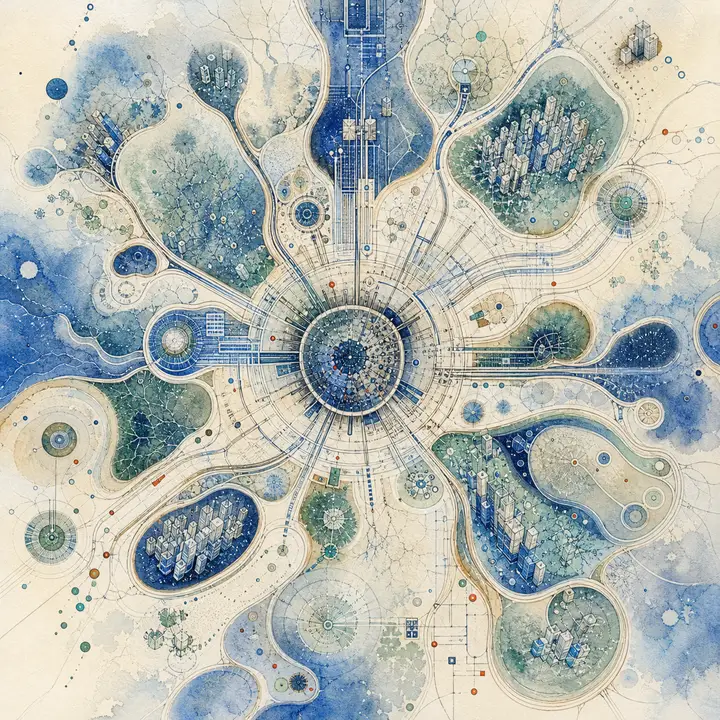
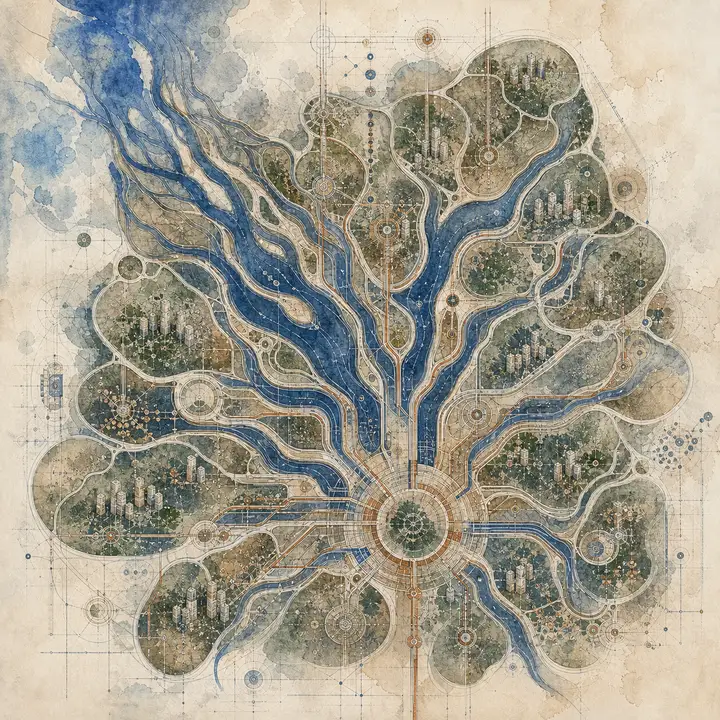
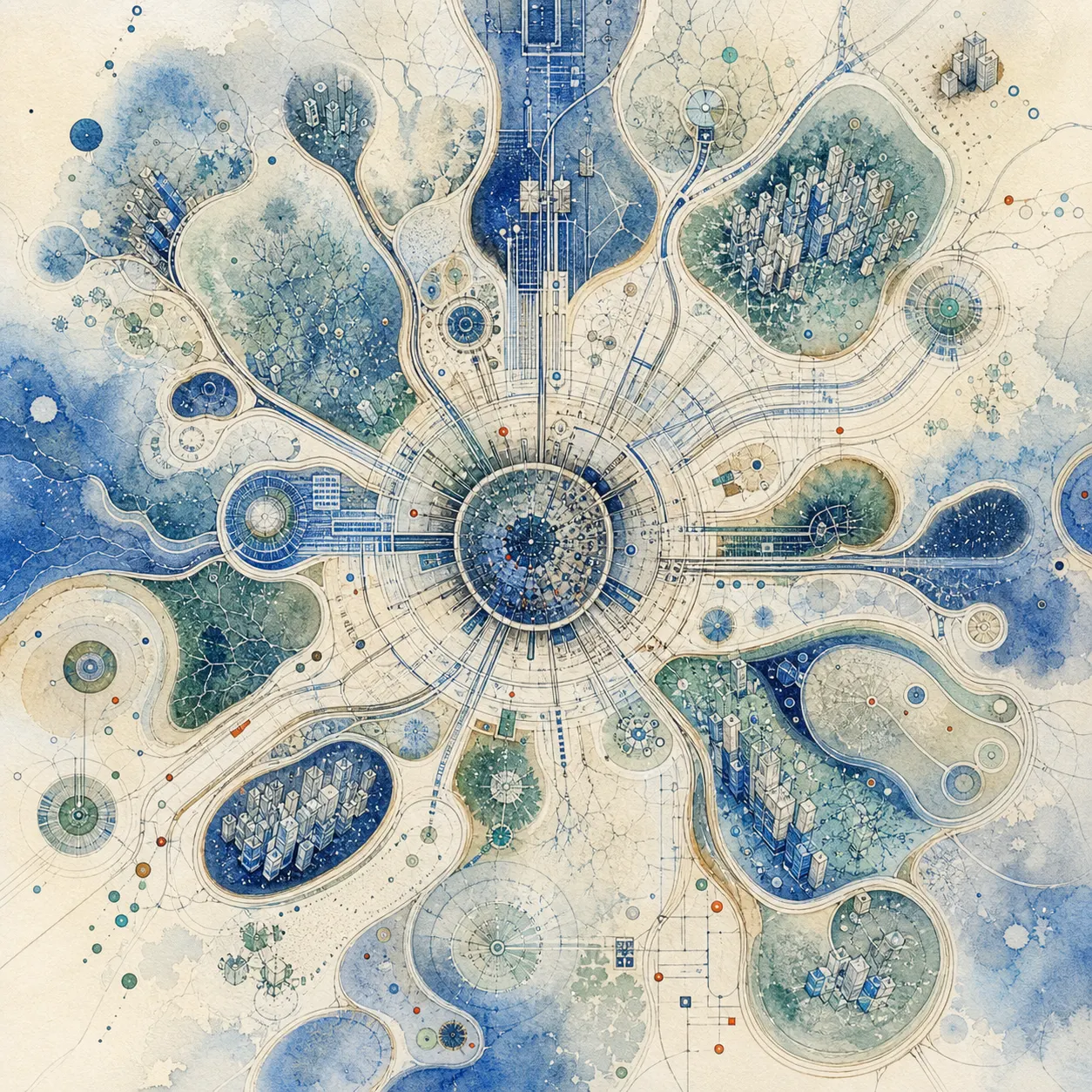
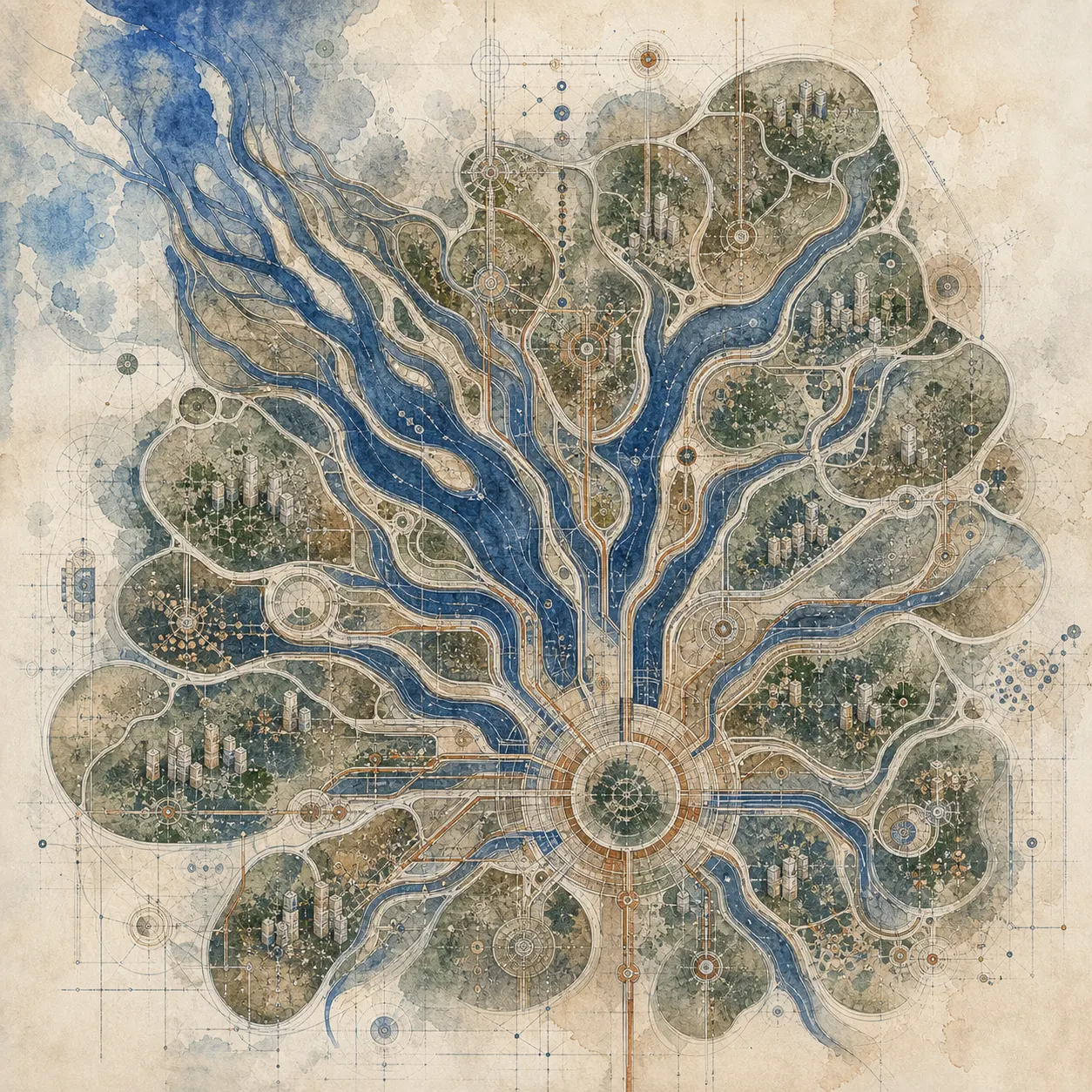
  5. A radial blue-and-cream diagram of a settlement spreading outward in lobes from a central hub, part cell colony and part wiring schematic.

    Colony circuit05

  6. A river delta seen from directly above, its channels branching in indigo watercolour across cream paper, with small settlements set along the branches like entries in a ledger.

    Ledger delta06

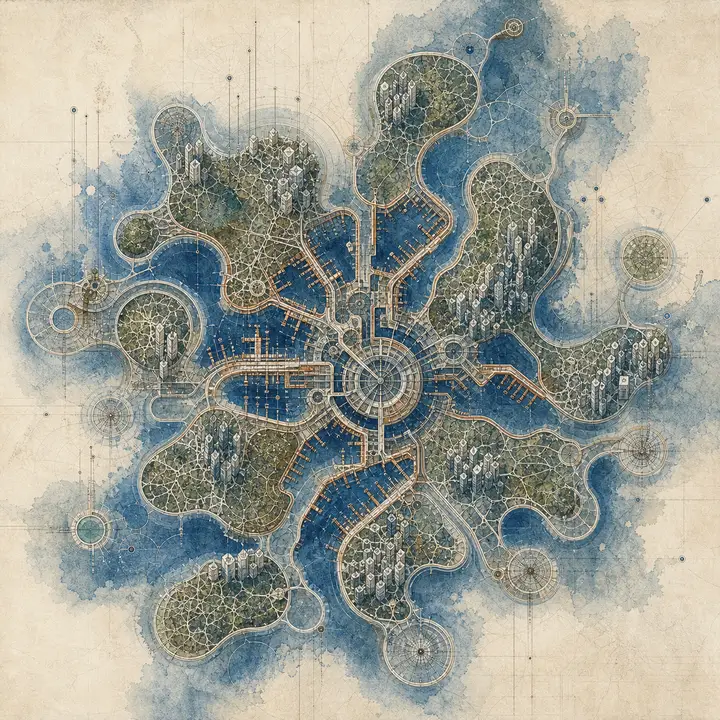
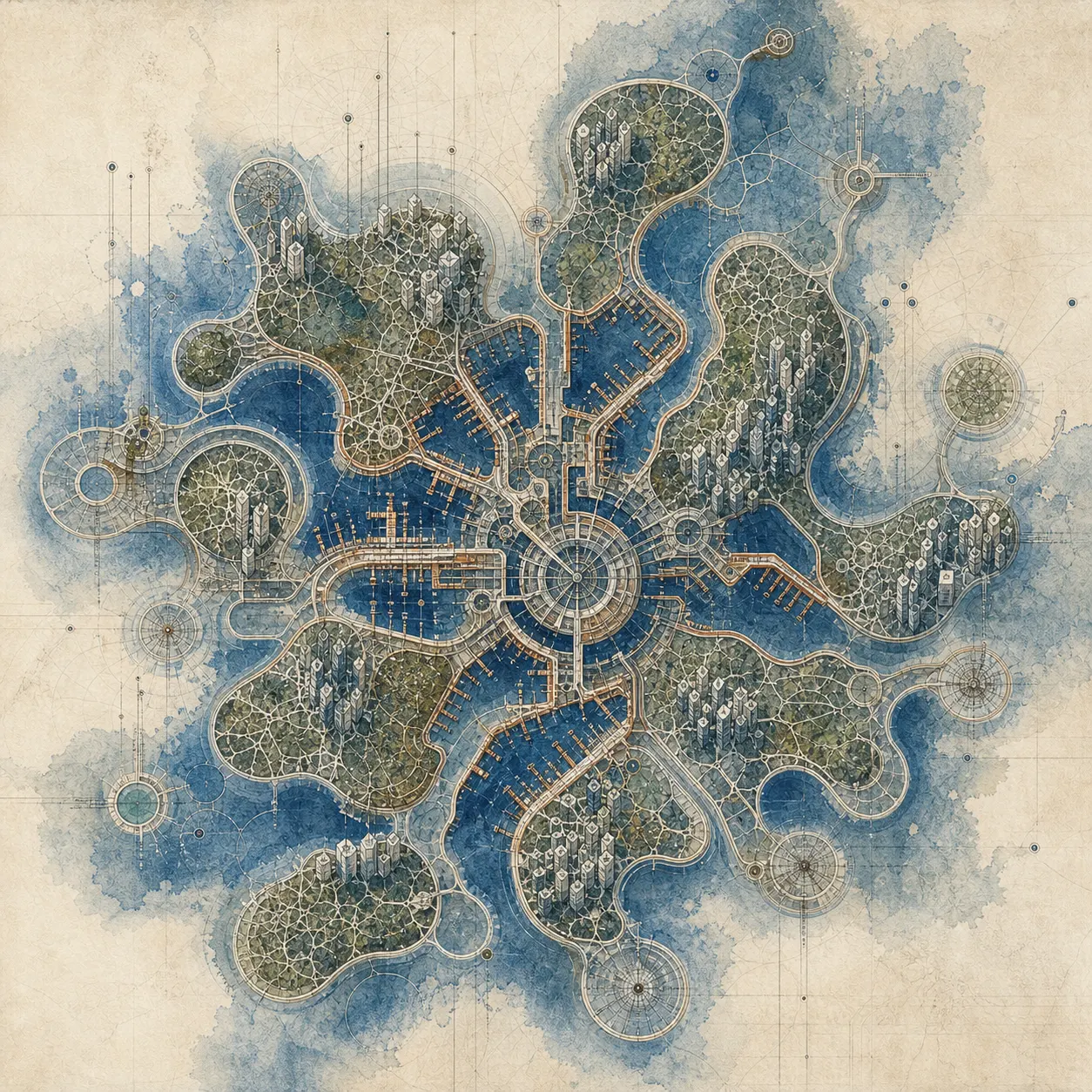
  7. A harbour drawn from above as a mycelial network — rounded basins and inlets joined by looping channels, rendered in blue wash over a faint drafting grid.

    Mycelium harbour07

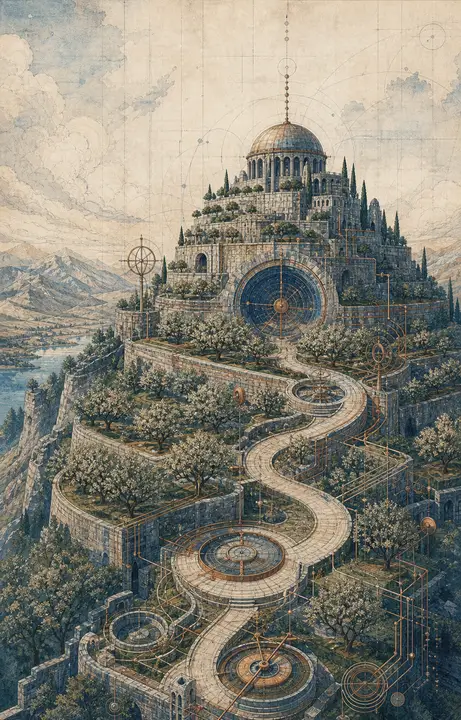
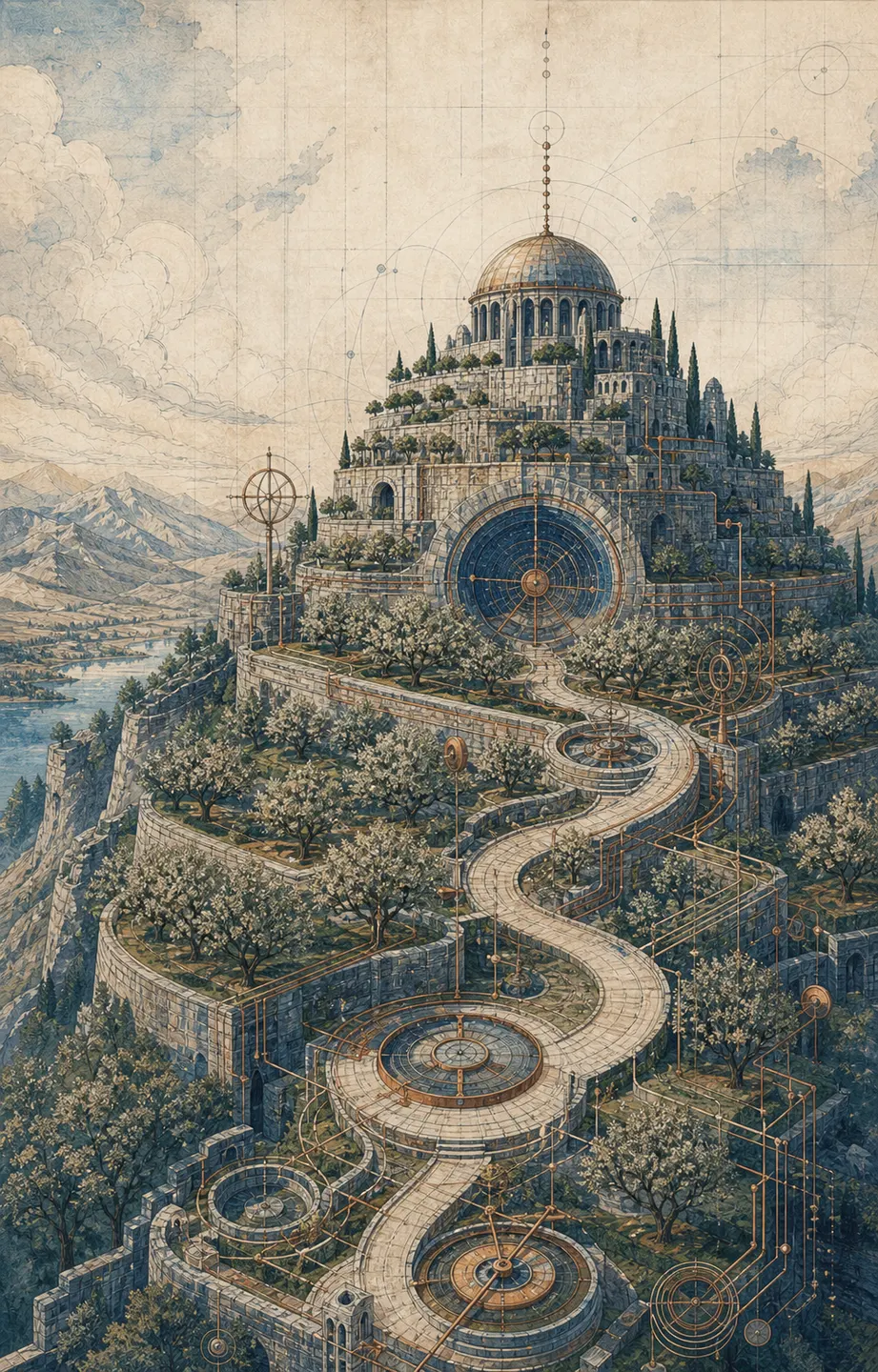
  8. A terraced hillside orchard rising to a domed observatory, a pale path spiralling up through the plantings, drawn in ink and muted watercolour.

    Orchard observatory08

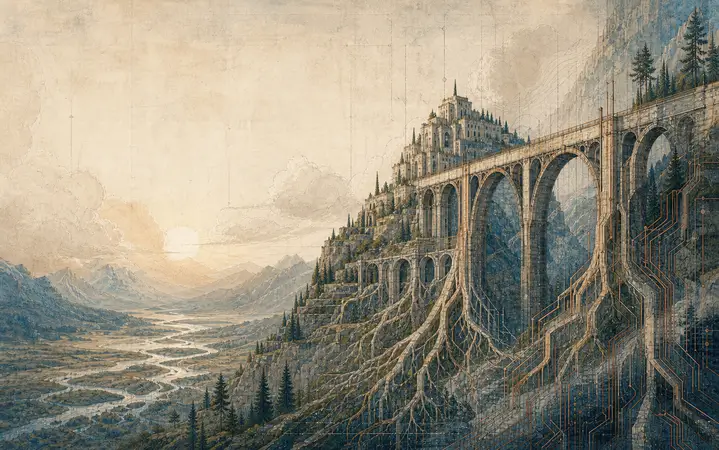
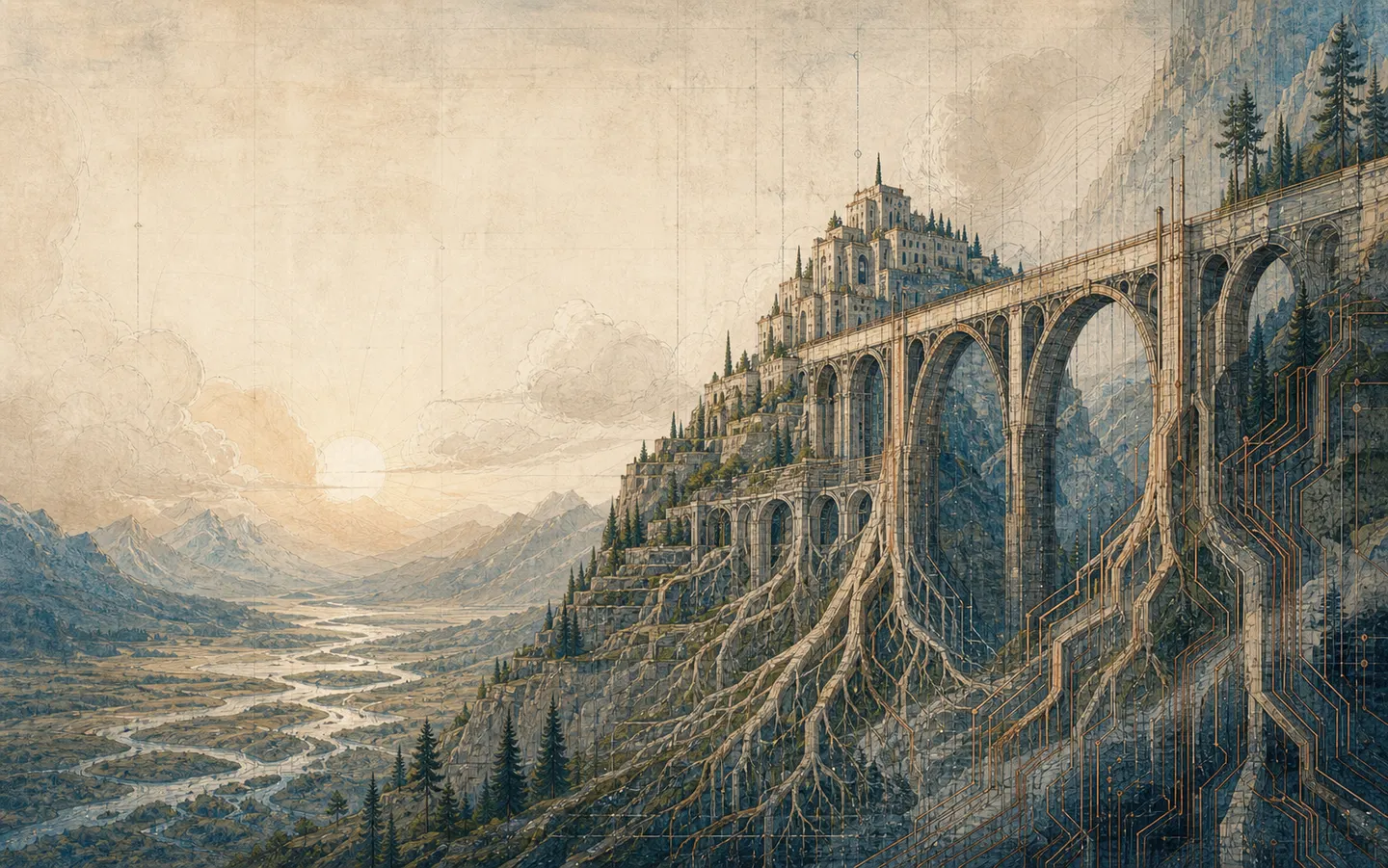
  9. A stone viaduct crossing a wide valley at sunrise, its piers continuing downward into the rock as roots, the far hills fading into warm haze.

    Rootline viaduct09

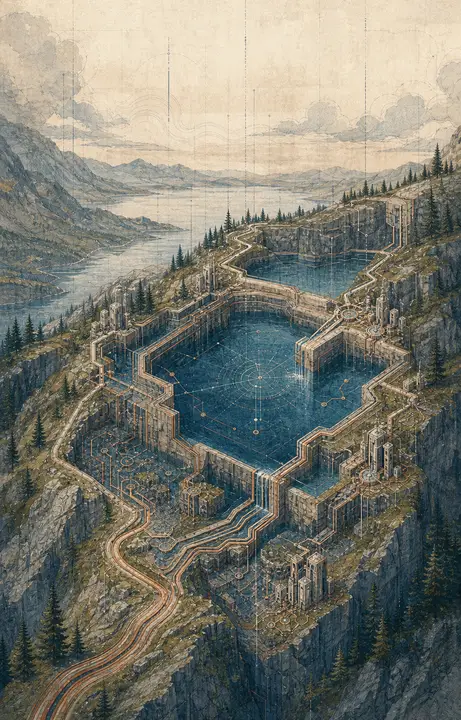
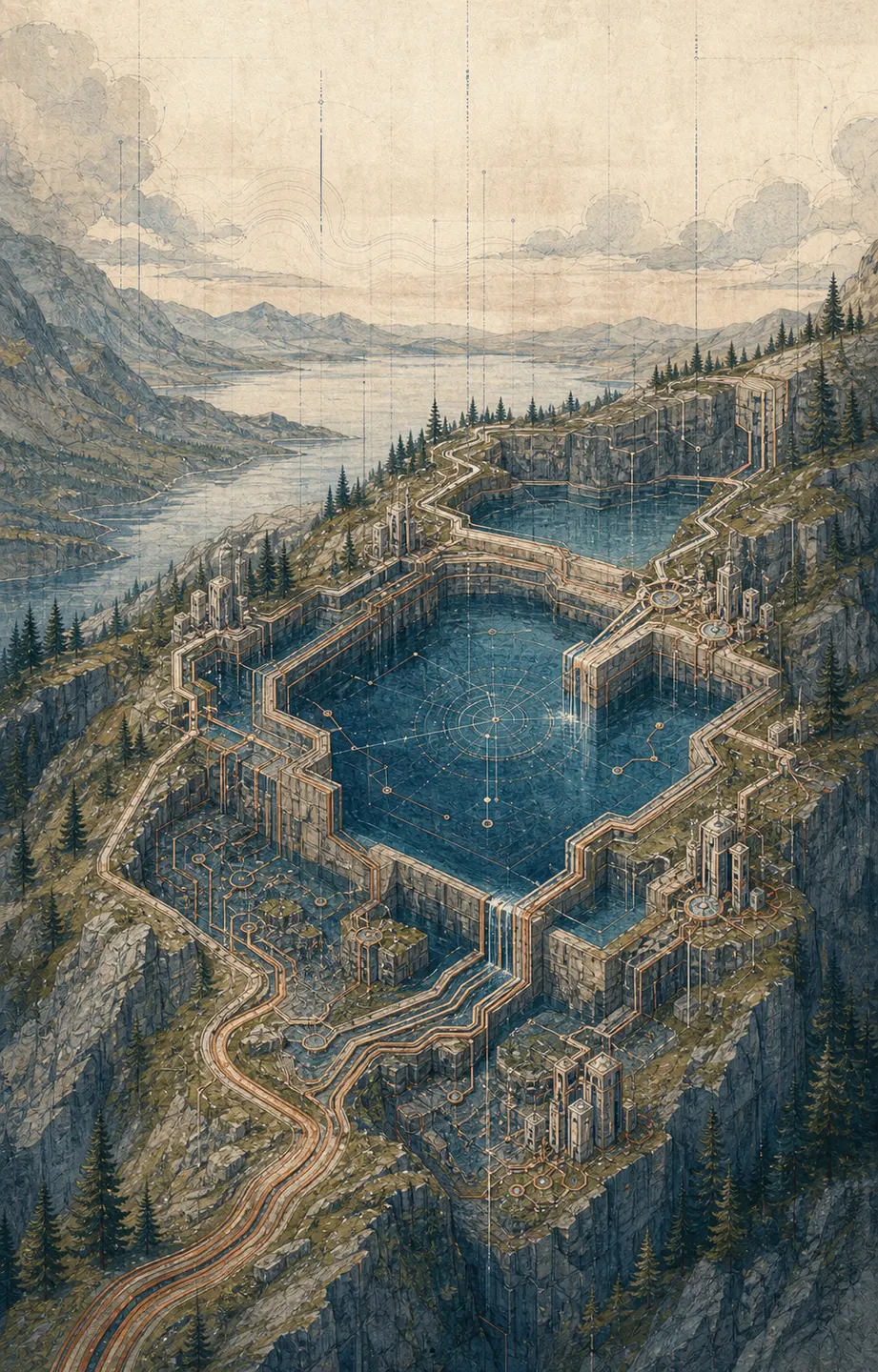
  10. A high mountain reservoir seen at a steep angle, held in stepped terraces, the water a flat dark blue against grey-green slopes.

    Terrace reservoir10

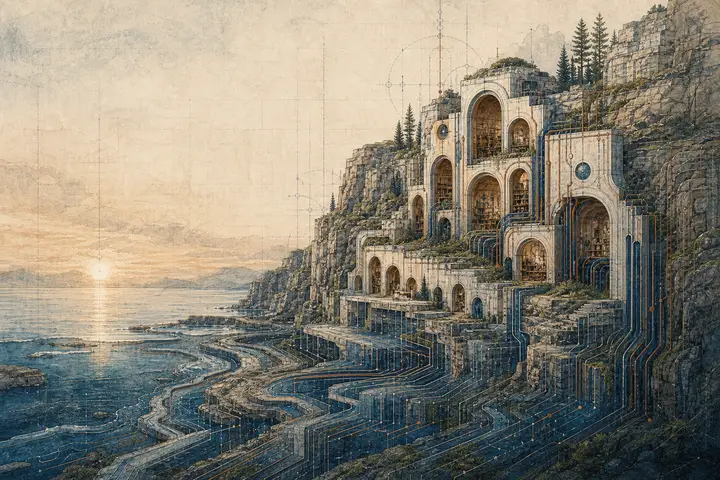
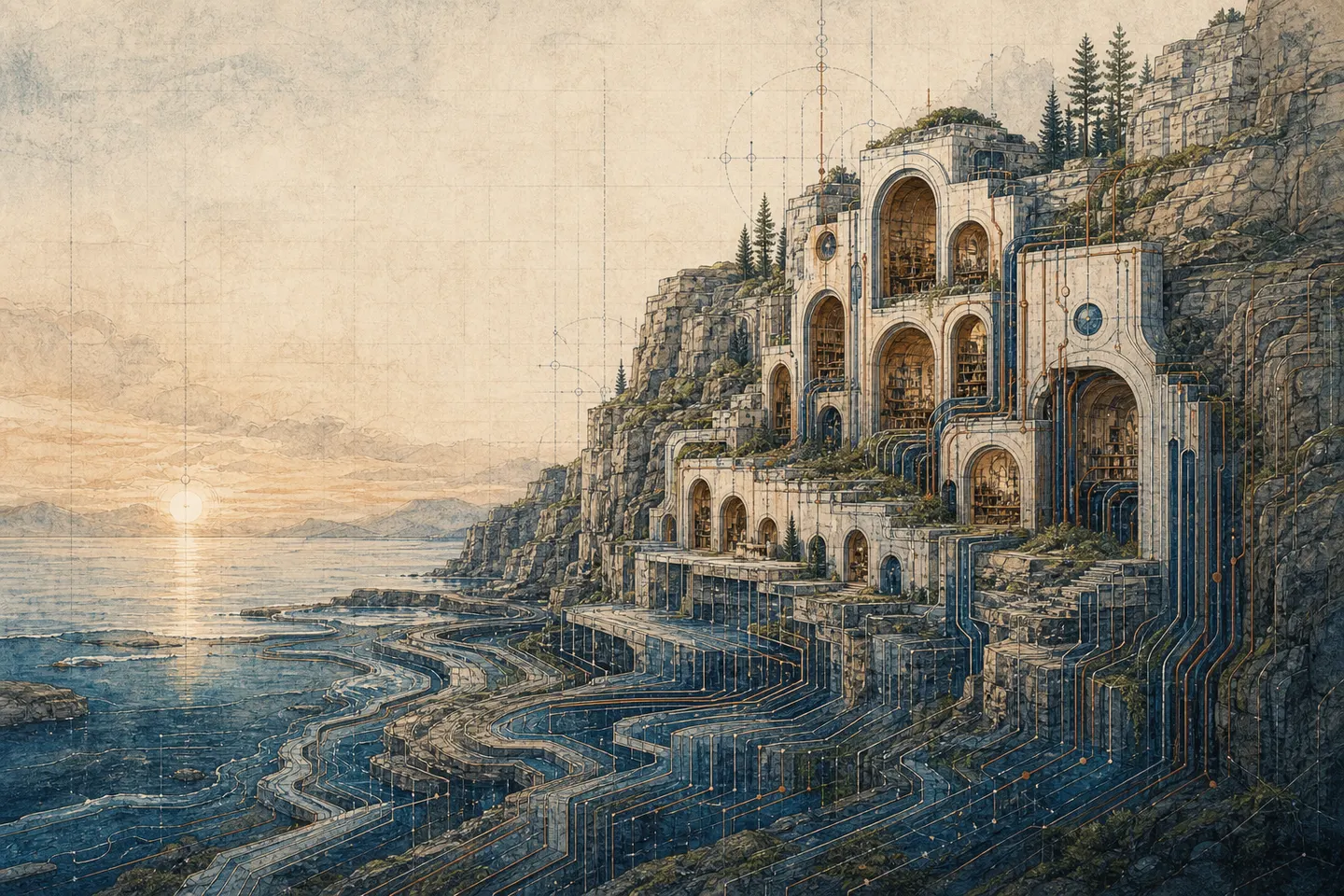
  11. A cliffside archive of tall arched openings above a calm sea at sunset, the rock below cut into ledger-like tidal terraces.

    Tidal archive11

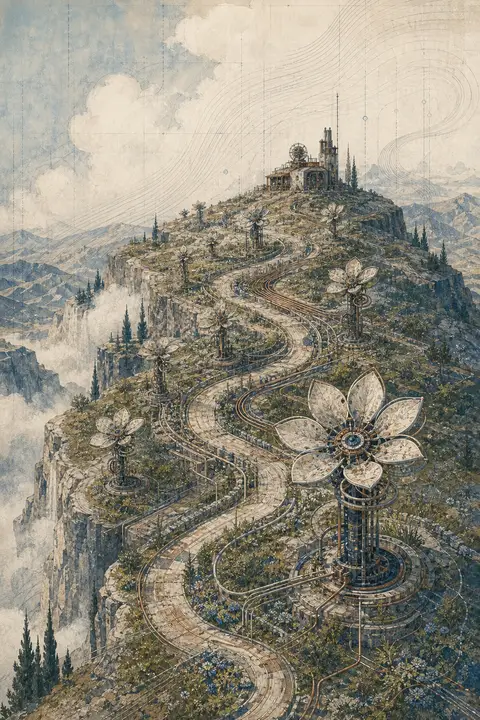
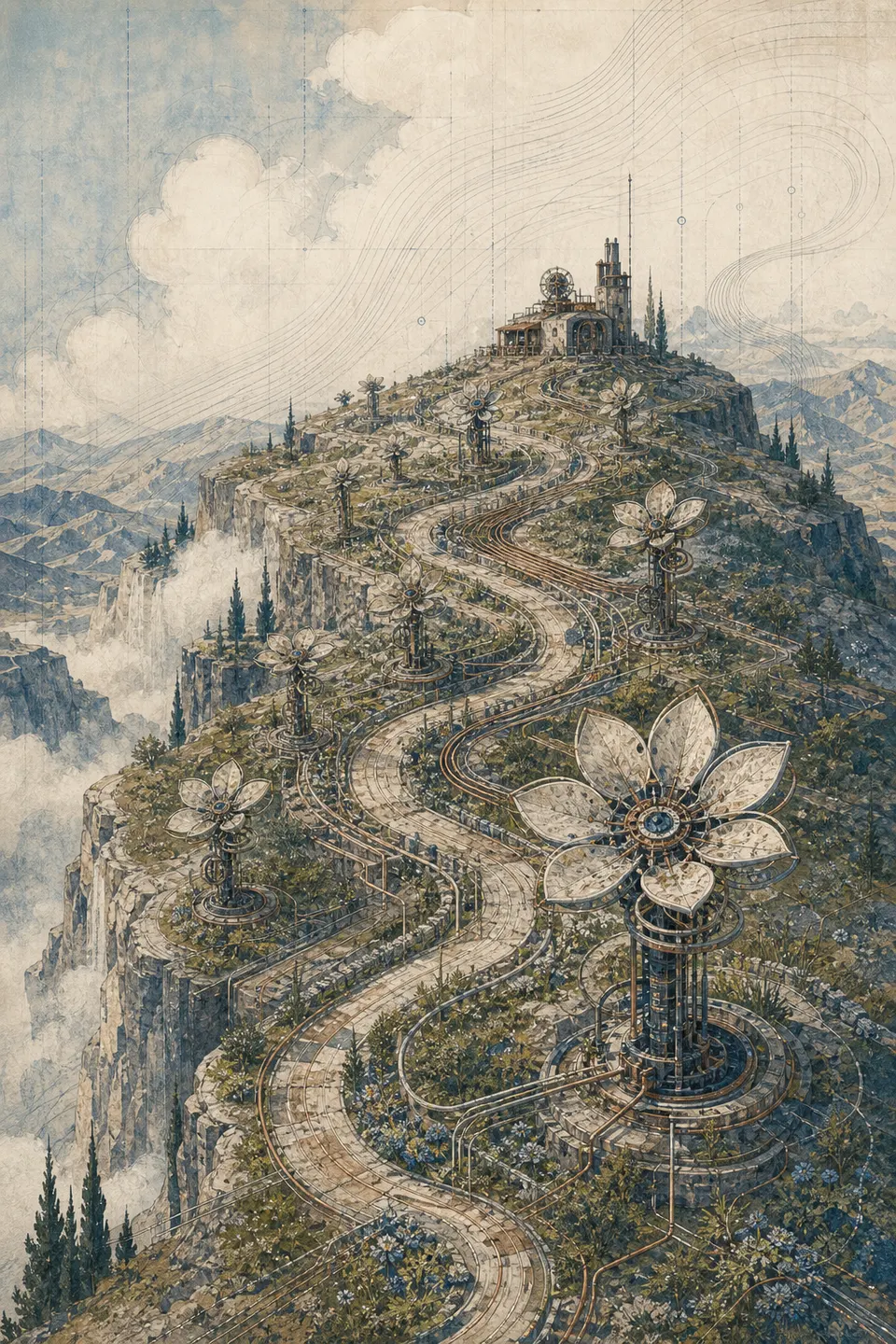
  12. A path winding up a misty plateau planted with slender flower-shaped turbines, a small structure at the summit, almost monochrome in soft grey-green.

    Wind garden12

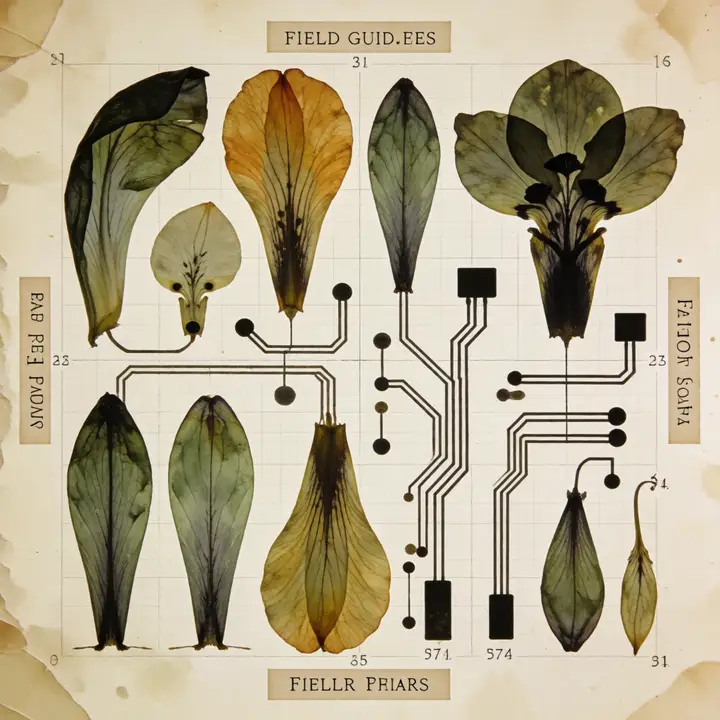
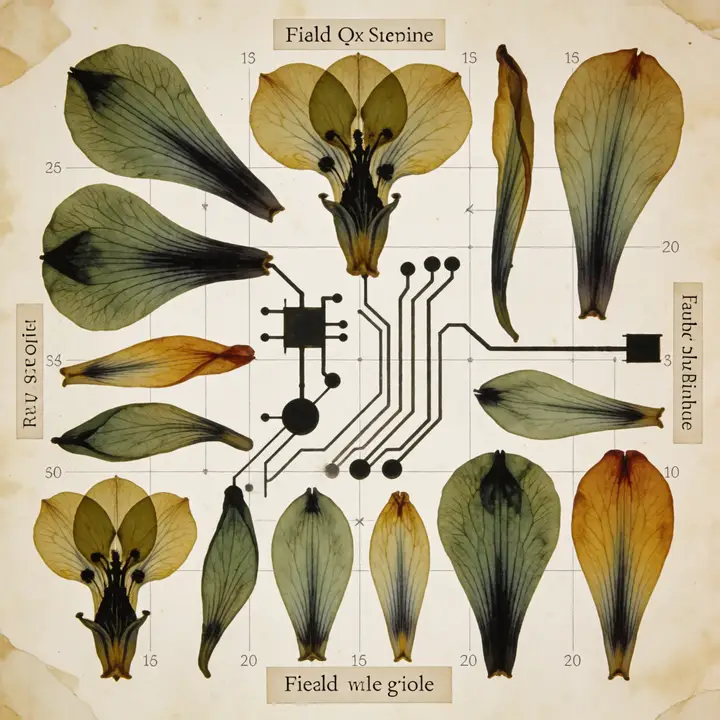
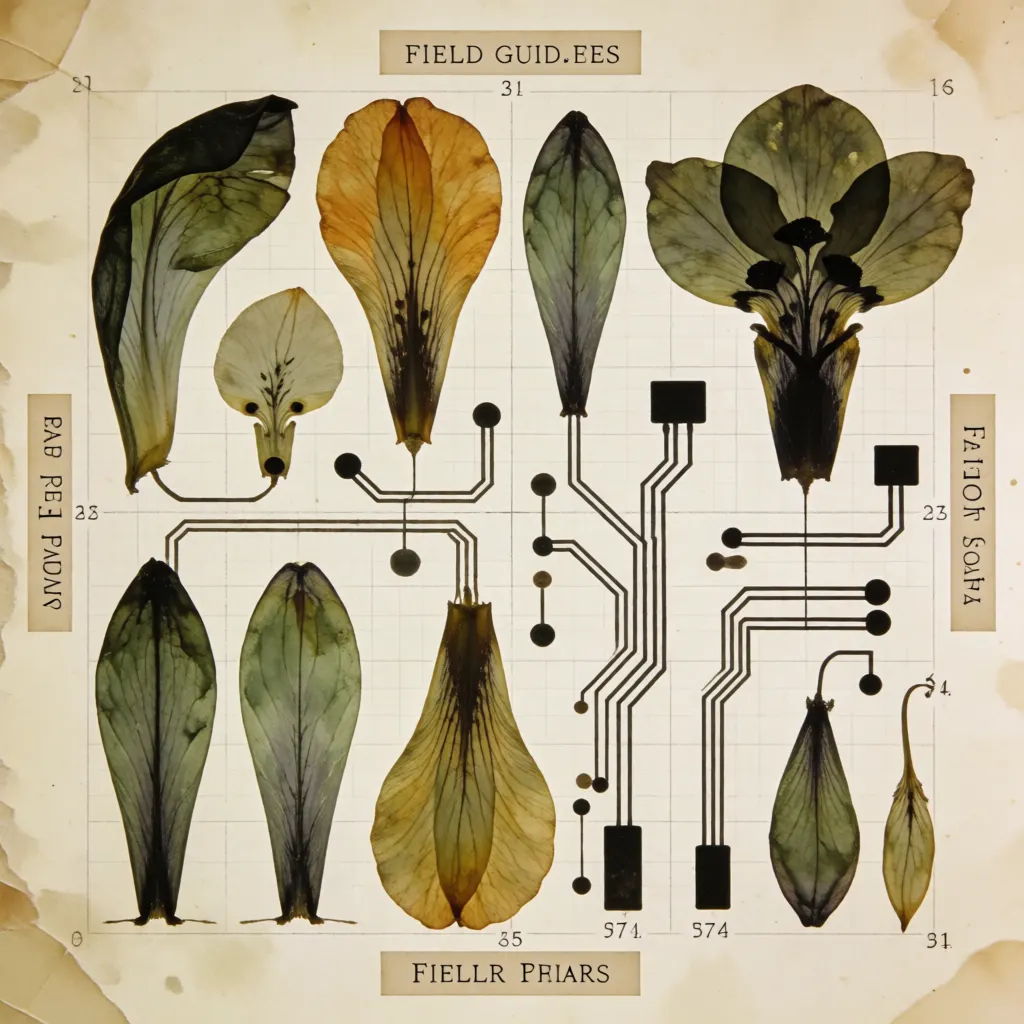
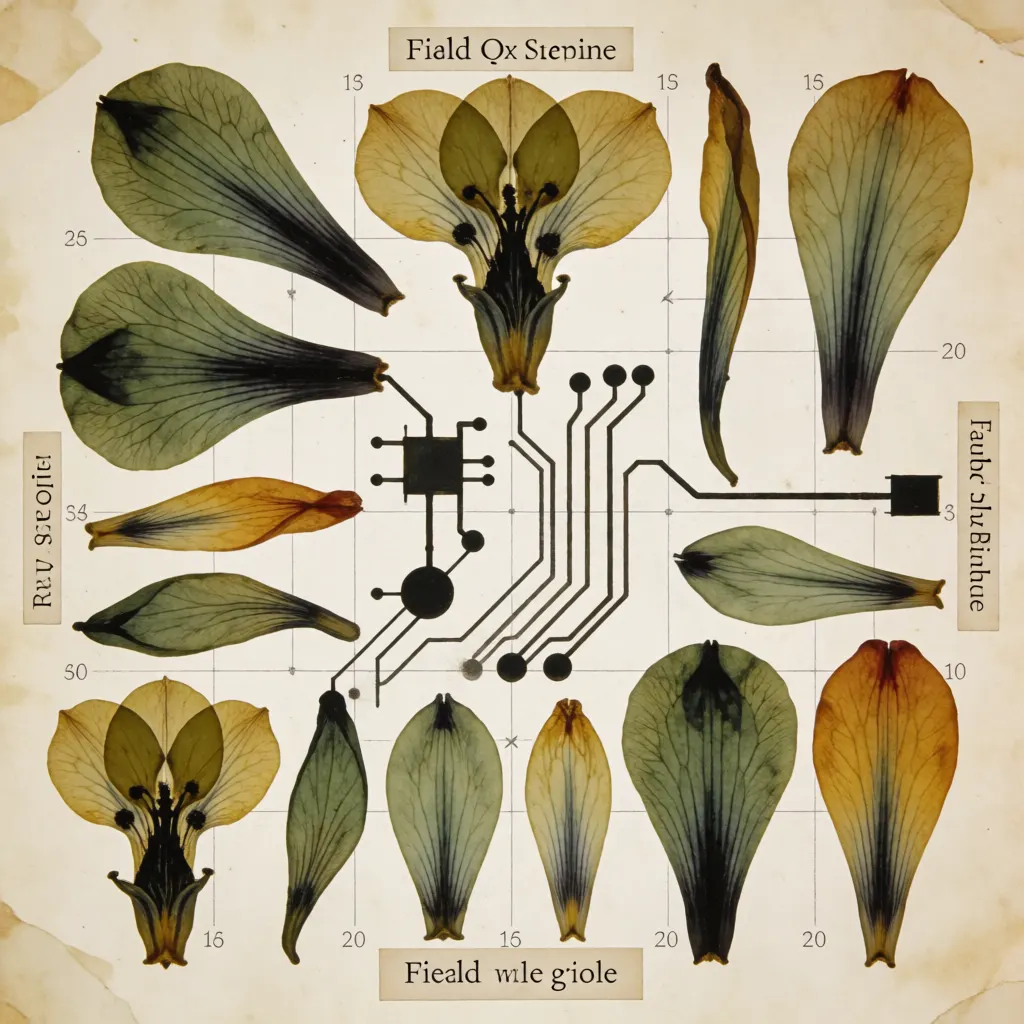
  13. A field-guide plate of pressed petals and leaves arranged in a grid on cream paper, with black circuit traces and surface-mount components running between the specimens as though they were wired together.

    Pressed petals I13

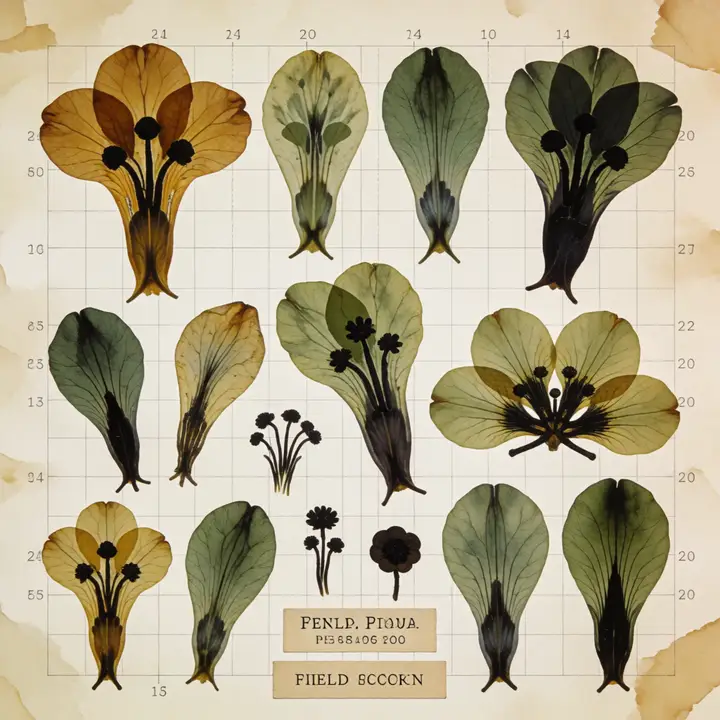
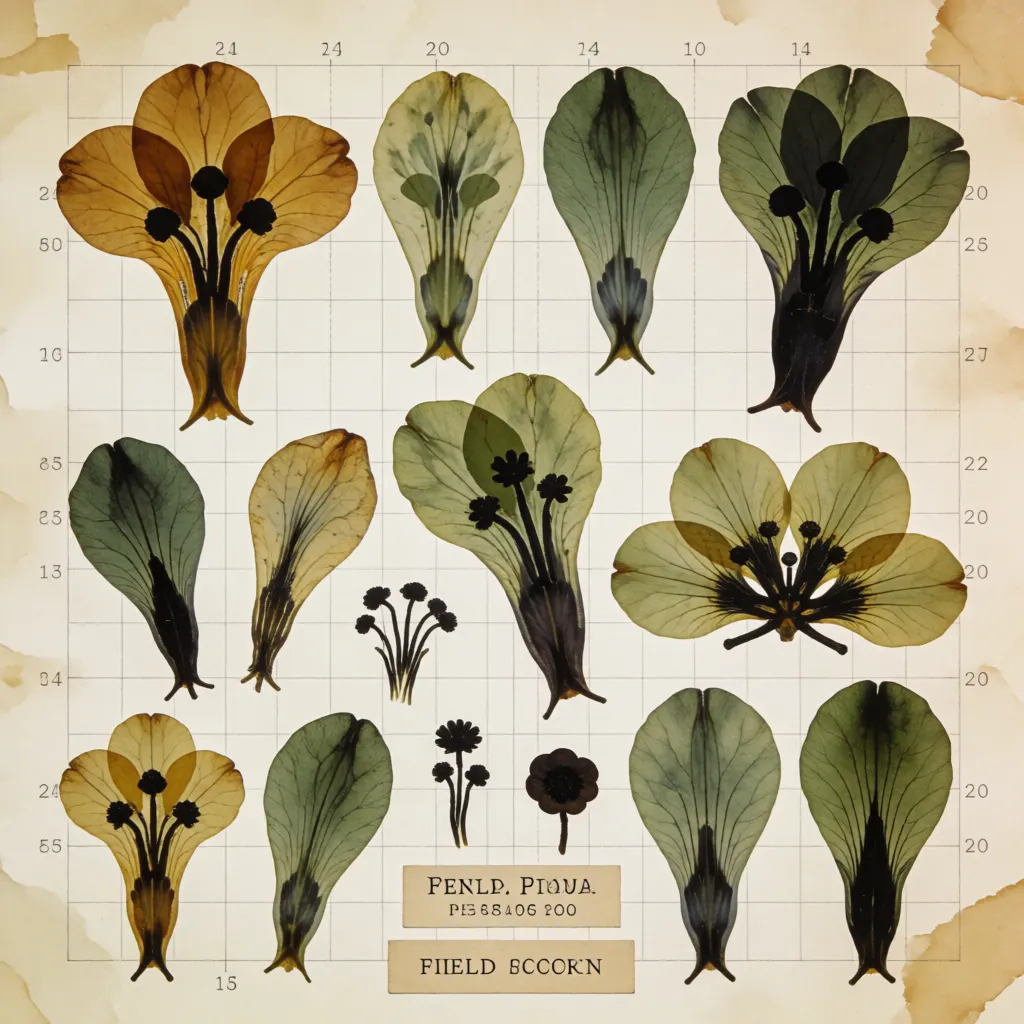
  14. A second field-guide plate of pressed flowers with circuit traces threading between them, annotated with handwritten specimen labels and margin numbers.

    Pressed petals II14

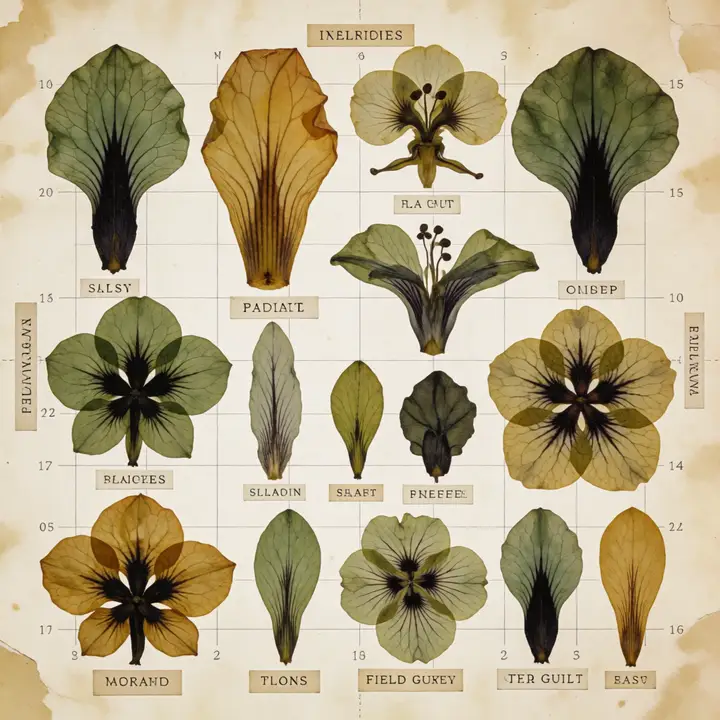
  15. A denser specimen grid of pressed yellow and olive flowers on gridded paper, laid out in even rows with numbered margins.

    Pressed petals III15

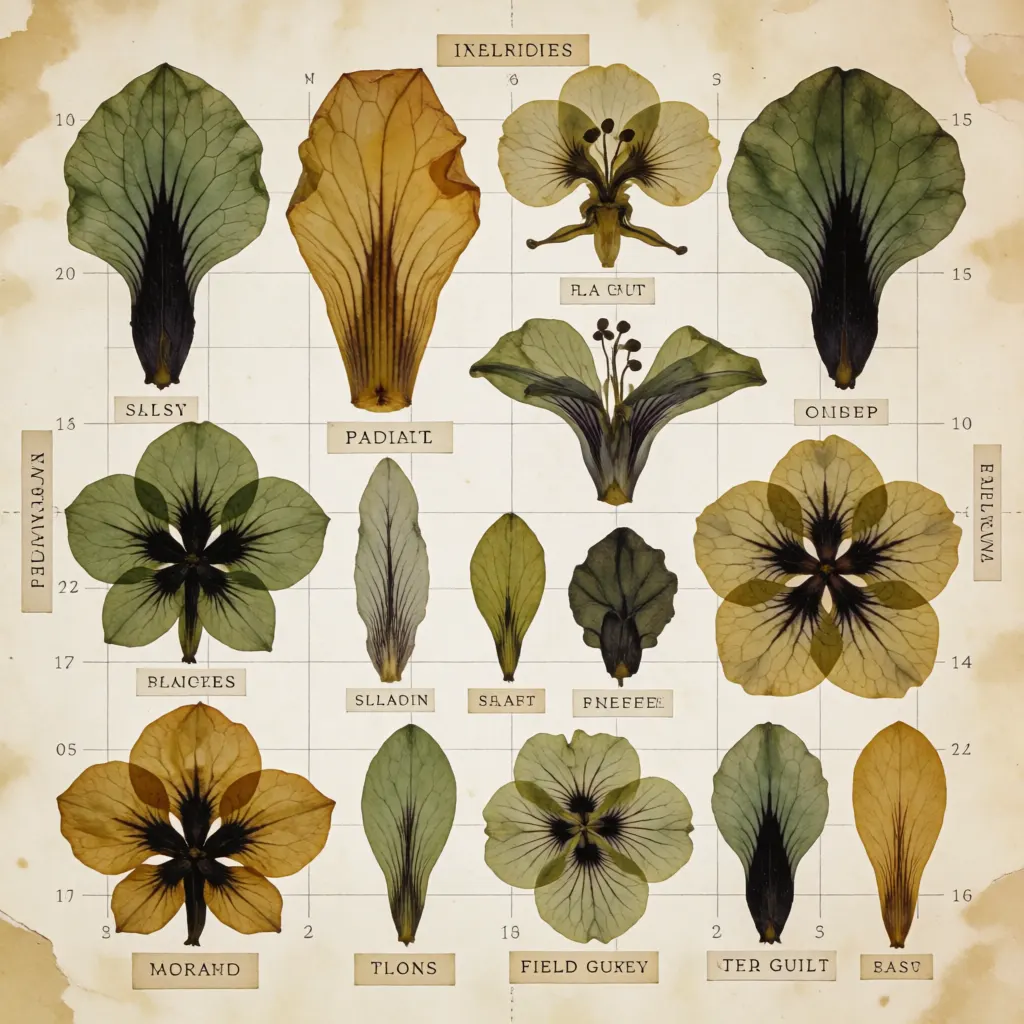
  16. A field-guide plate of pressed blossoms and leaves in olive, ochre and near-black, arranged in four rows with small printed labels beneath each.

    Pressed petals IV16

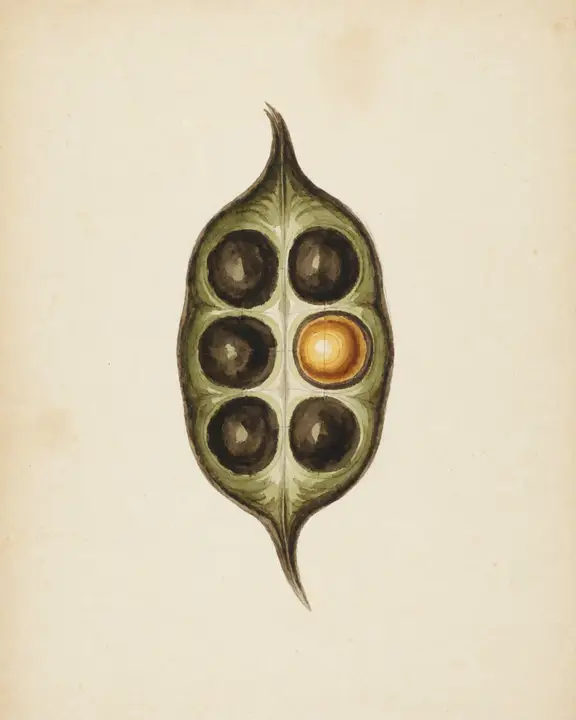
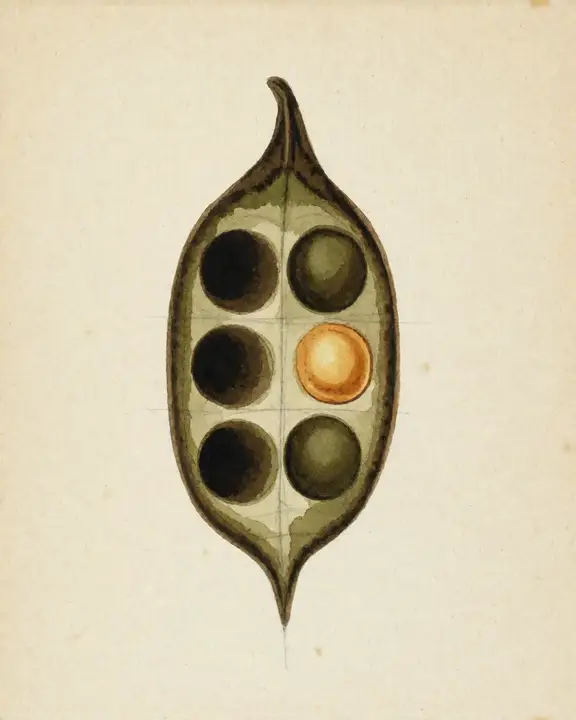
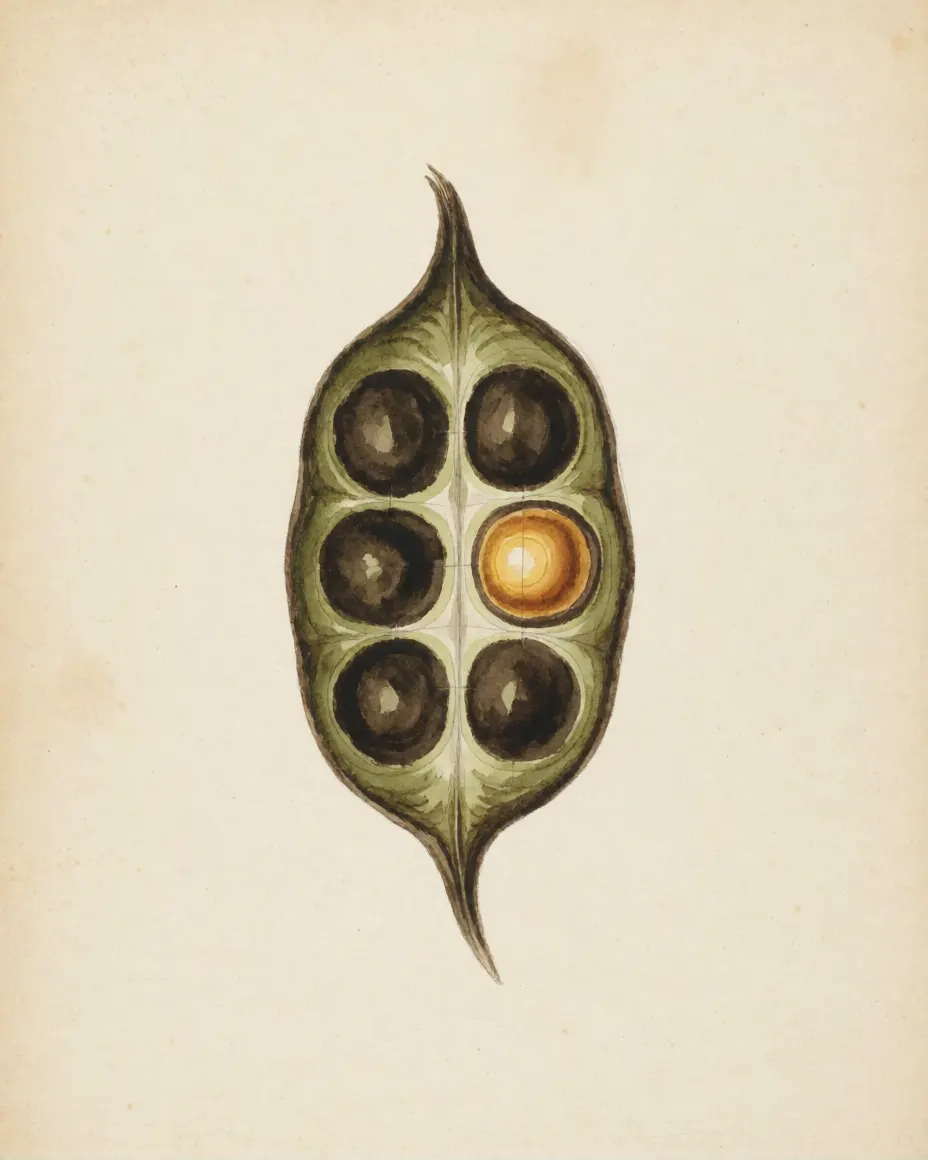
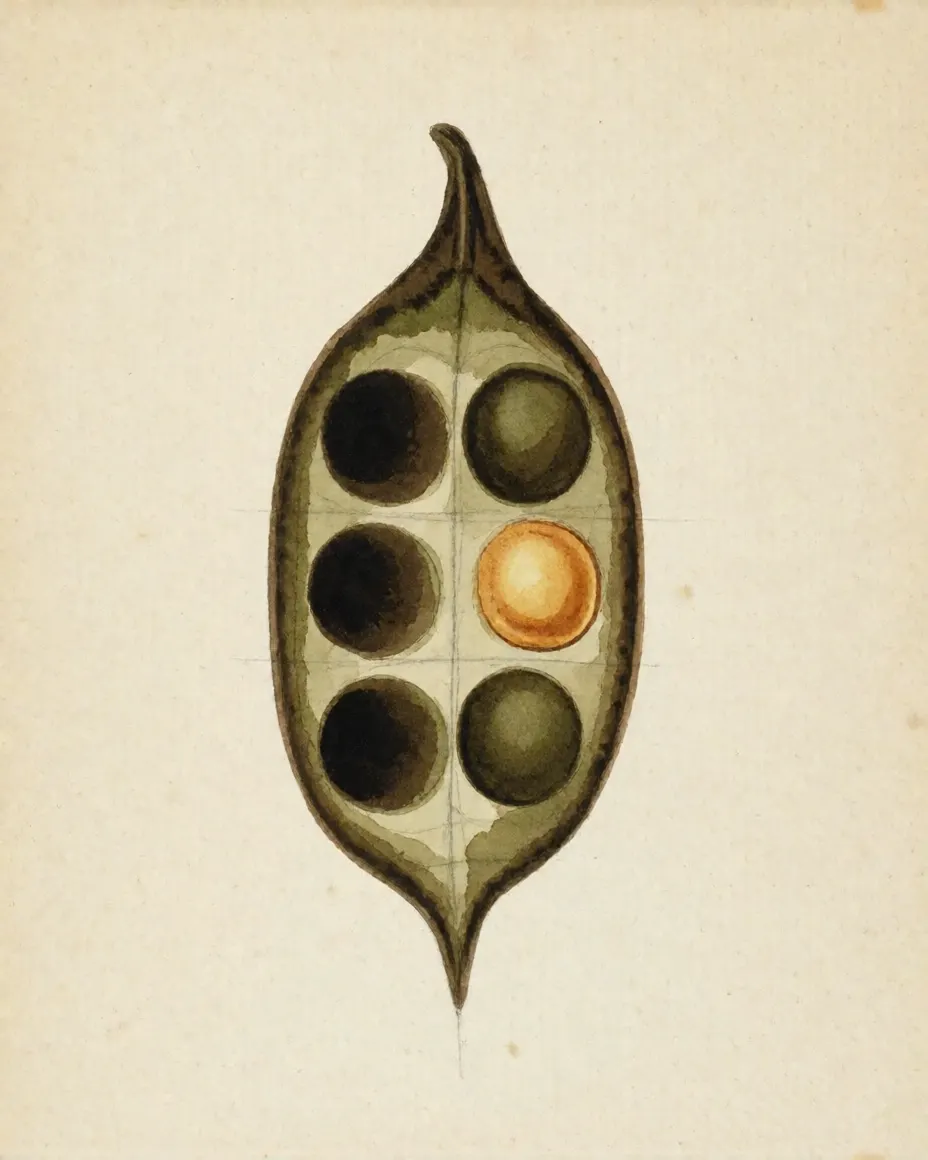
  17. A single seedpod painted on aged cream paper, split open to show six dark seeds in a row with one lit amber, drawn in the style of a botanical specimen plate.

    Seedpod study I17

  18. A second study of the same seedpod, rounder and more heavily shaded, with faint graphite construction lines still visible around it.

    Seedpod study II18

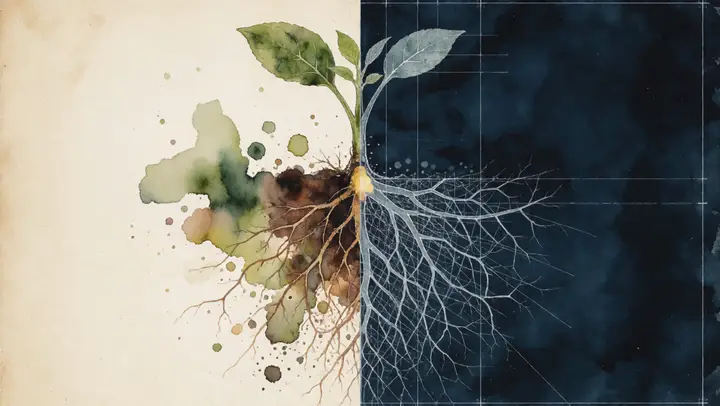
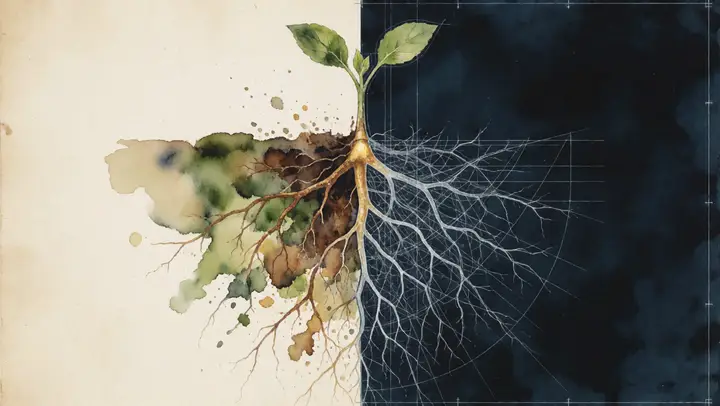
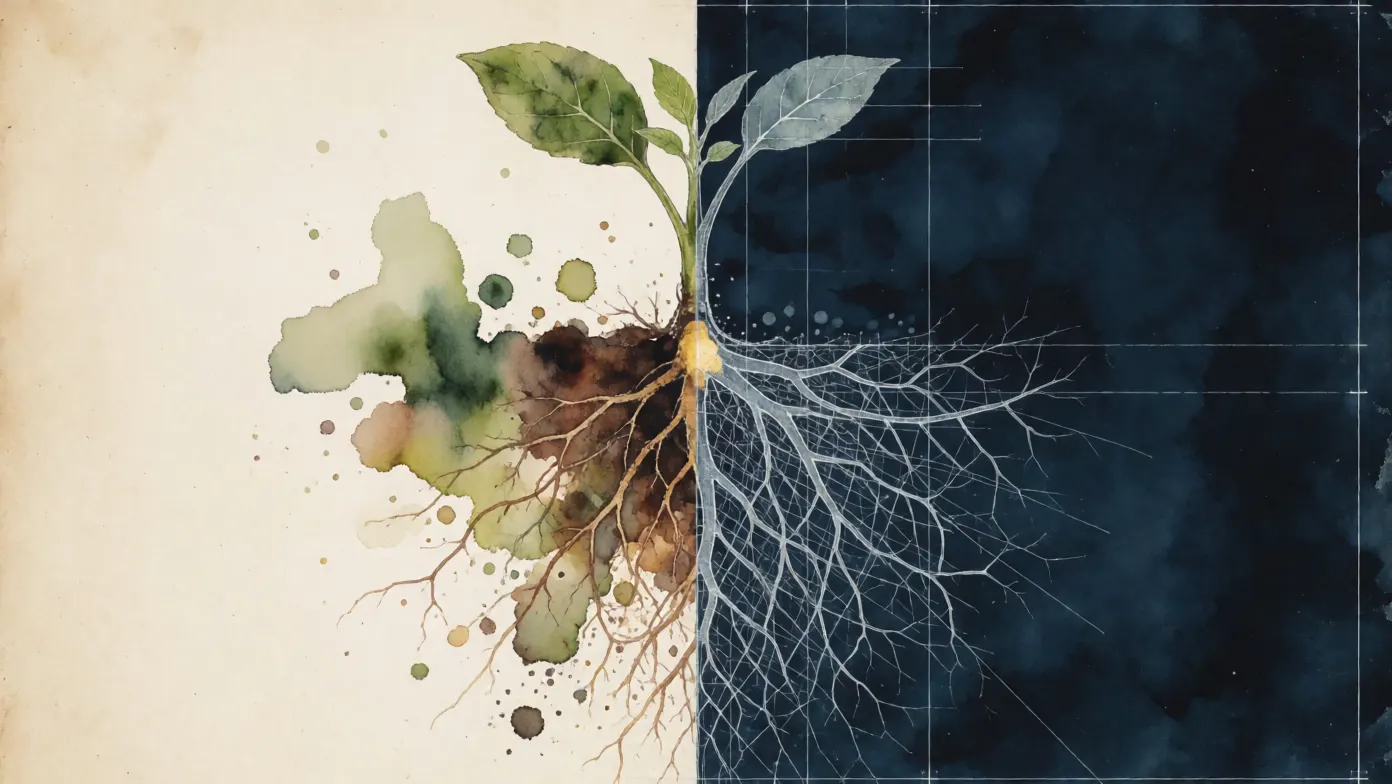
  19. A split panel: on the left a seedling in green watercolour above warm soil, on the right the same plant’s root system spreading pale against deep midnight blue.

    Root system I19

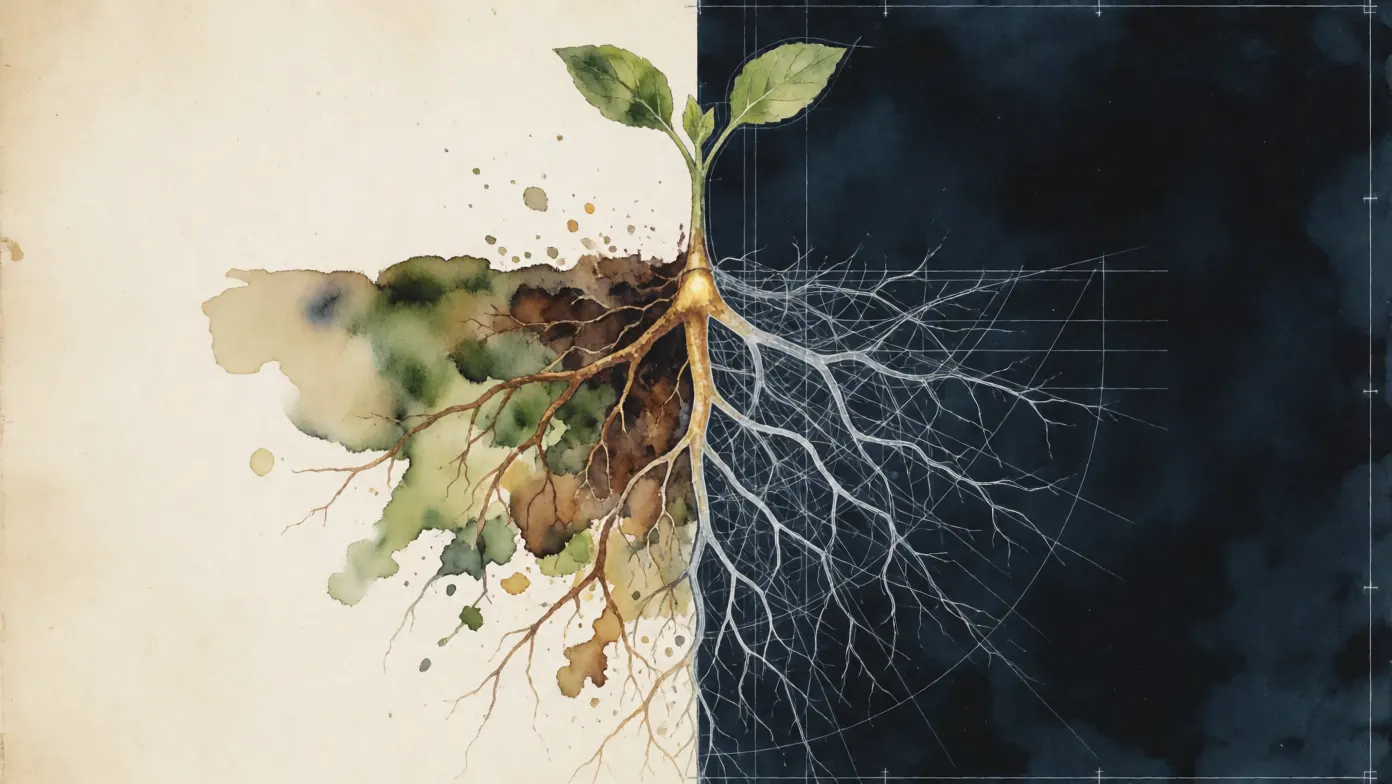
  20. A second root-system study, the seedling smaller and the root network below it finer and more widely branched across the dark half of the panel.

    Root system II20

How
Provenance

Generated is the raw material, not the work.

Eight of these came out of a ComfyUI graph running on this machine. Twelve came out of a hosted image model. Open any plate and it tells you which, and when. Then they get graded, cropped, and mostly thrown away — what is here is what survived that, which is a small fraction of what was made.

They are shown at their natural aspect and never cropped to fit the grid, which is why the cards are square and the pictures inside them are not.

World

Nature, drawn as machine.

All four

mail@khushin.com